Published on 15.04.2026
Plant-based hair colour: what nobody tells you (and what it really does)
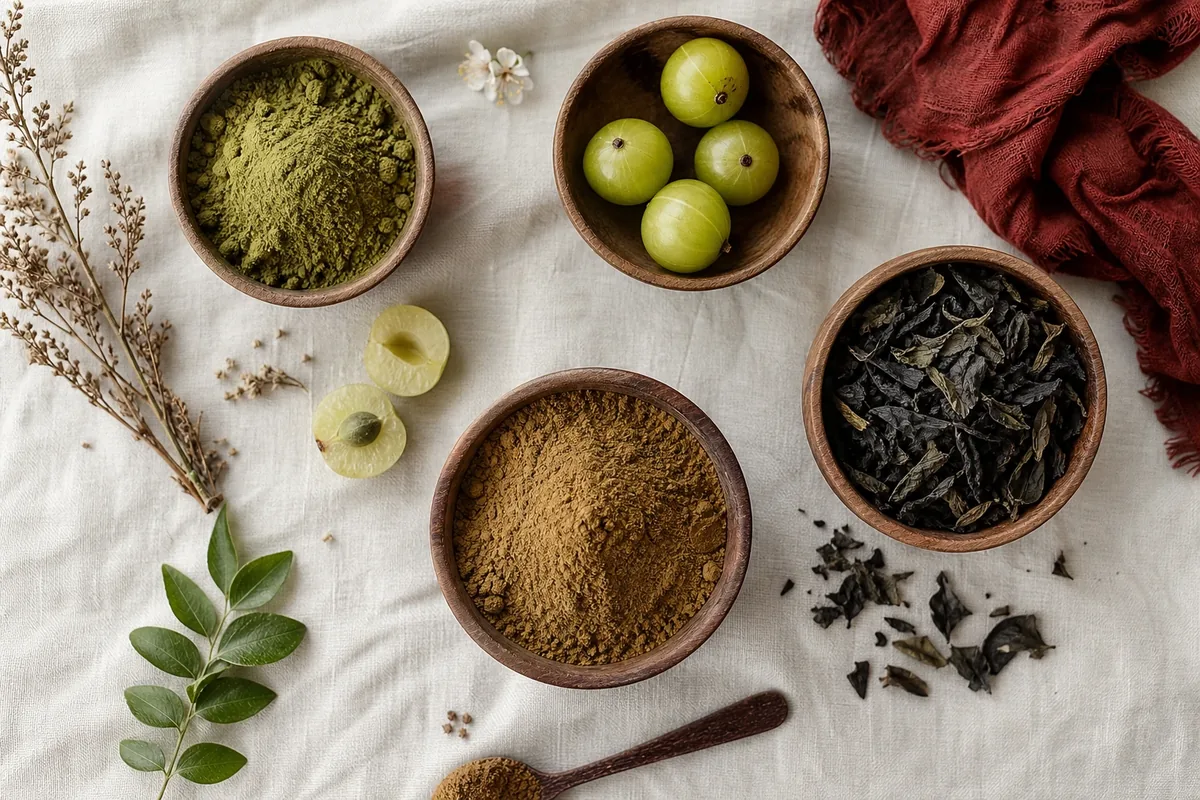
Plant-based colour has its devotees and its disappointed — often for the same reason: they were sold something other than what it is. Let's set things straight, frankly.
What it does, and does well: it coats. Pigments from henna, indigo and ayurvedic plants settle around the fibre instead of penetrating it. Measurable from the first application: hair thicker to the touch, shinier, with tones that live with the light. On reactive scalps, it often ends post-colour itching for good.
What it will never do: lighten. Plant colour contains no oxidant — it can only darken or colour tone-on-tone. If you are a brunette dreaming of blonde, this is not your tool, and anyone telling you otherwise is lying.
On grey hair, it works — differently. Where oxidation covers in a flat block, plant colour blends greys into tones. The result is more natural, more alive, but less "uniform". Above 50% grey, two closely spaced applications are sometimes needed at the start.
The genuinely delicate subject: transition. Going from chemical to plant-based is unproblematic. The reverse is risky: metallic residues from low-grade hennas can react violently with lighteners. That is why we require your full colour history and a strand test — non-negotiable, even if you are in a hurry.
In short: plant colour is the right choice if you want to strengthen your hair, colour tone-on-tone or go darker, with a natural finish. For lightening and radical changes, modern oxidative colour, well handled, remains the right tool. A good colourist's job is to tell you which of the two is right for you — not to preach their own chapel.